
 By admin-codelyx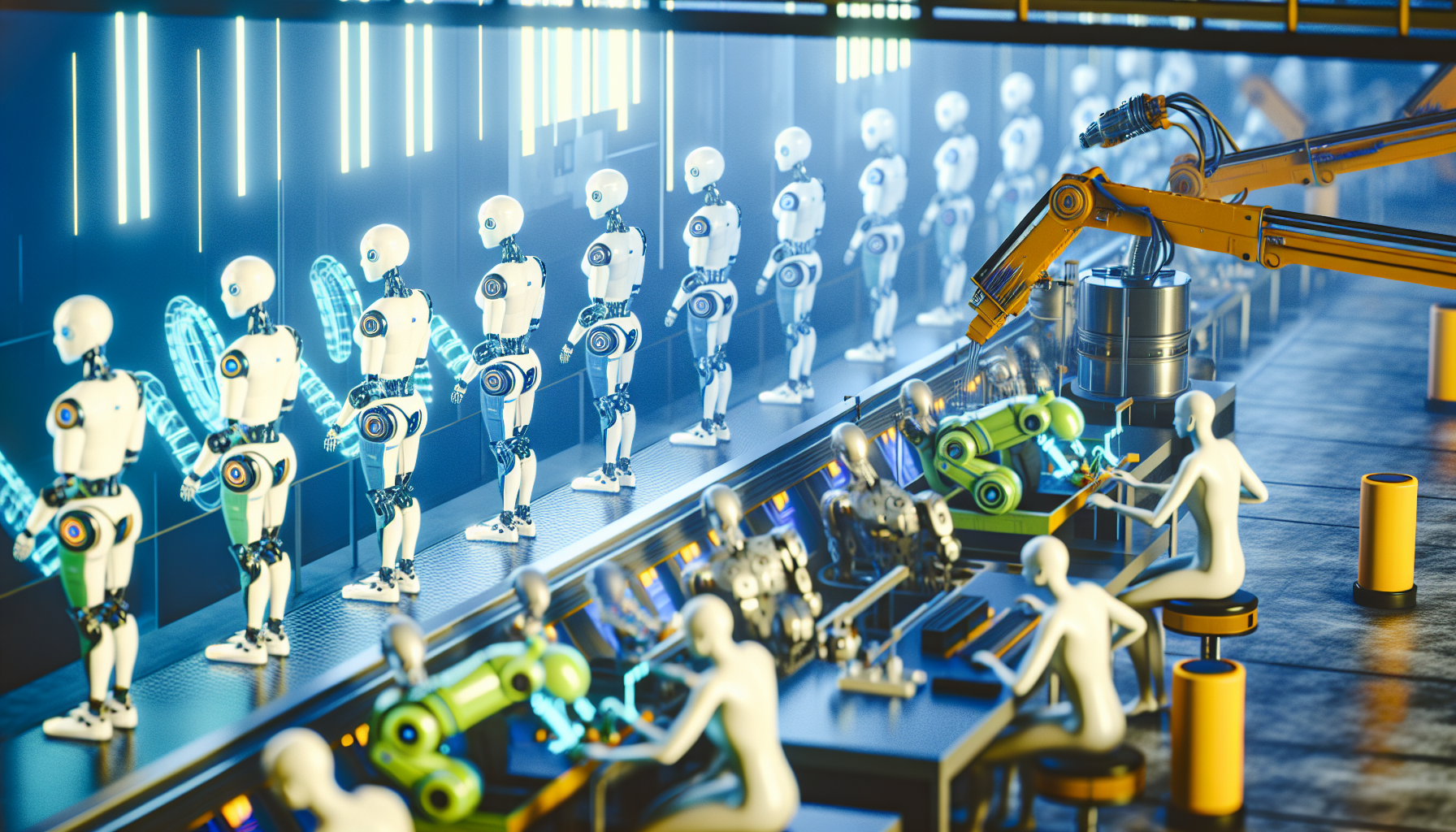
AI Automation & Agents are revolutionizing the way businesses operate. This article explores the deep integration of these technologies in modern workflows. Learn how automation increases efficiency and innovation across various sectors.
The Rise of AI in Business Automation
The Rise of AI in Business Automation
AI Automation is transforming how businesses operate today. Smart minds use AI to perform tasks once done by humans. **Companies can now produce more with fewer errors.** In turn, this saves time and money.
Advancements in AI Technology
AI technology has come a long way. At first, AI could only handle simple tasks. Now, it can solve complex problems. For example, AI can manage data, analyze patterns, and make predictions. Moreover, AI works quickly and accurately, boosting business productivity. According to [McKinsey](https://www.mckinsey.com/), businesses using AI see improved efficiency and lower costs.
AI in Everyday Business Operations
AI Automation is present in daily business functions. It manages schedules, sends reminders, and answers customer questions. For example, smart assistants like chatbots handle customer queries 24/7. As a result, employees focus on more important tasks. This approach eliminates manual errors and ensures smoother operations.
Competitive Edge Gained Through AI
Adopting AI provides businesses with a strong advantage. Companies become industry leaders by using AI Automation & Agents. **Enhanced productivity and efficiency set them apart from competitors.** Additionally, businesses can streamline processes and make better decisions. A study by [Deloitte](https://www2.deloitte.com/) shows that businesses using AI outperform their rivals significantly.
However, some businesses still hesitate to adopt AI. They fear change and costs involved. Yet, those who embrace AI gain lasting benefits. They ensure they stay competitive in the ever-evolving market.
For further insights, check out the related post on the benefits of AI in business: Harnessing AI: Automation & Agents Simplified.
Next, we will explore how AI Agents operate in different industries and enhance customer experiences in the chapter, “Understanding AI Agents and Their Roles.”
Understanding AI Agents and Their Roles
Understanding AI Agents and Their Roles
AI agents are like smart helpers for computers. They can do tasks on their own without needing much human help. For example, an AI agent might send an alert when it’s time to water the plants.
AI agents play many important roles in businesses today. They make work easier by handling repetitive tasks. This means people have more time for creative jobs. As a result, businesses can be more efficient and save money.
What are AI Agents?
AI agents are computer programs that use special rules to solve problems. They can learn and make decisions based on the data they collect. For example, think of an AI agent like a robot vacuum. It figures out where to clean and avoids bumping into furniture.
AI agents operate quietly in different industries, like healthcare and banking. In healthcare, AI agents help doctors track patient progress. They can also alert nurses when a patient needs attention.
However, not all agents are the same. Some focus on gathering information, while others perform specific actions. This diversity makes them vital in automating tasks and improving operations.
Diverse Applications of AI Agents
The uses of AI agents are endless. For instance, in retail, AI agents manage inventory by predicting which products will sell fast. Therefore, stores can keep popular items in stock. Another example is self-driving cars using AI agents to navigate safely.
Additionally, AI agents help companies with data analysis. They can quickly sort through large amounts of data, spotting trends and patterns much faster than humans can. These insights help businesses make better decisions.
To learn more about how AI agents work, visit this in-depth guide on AI automation and agents.
Improving Customer Service with AI
AI agents greatly enhance customer service. For example, chatbots answer simple questions online, helping customers get quick answers. This means customers don’t have to wait for a human representative.
Furthermore, AI agents can remember customer preferences, providing personalized service. This makes shopping experiences smoother and more enjoyable. Imagine a store greeting you by name and suggesting items you like!
A Forbes article reports that companies using AI in customer service see increased customer satisfaction. Therefore, these businesses often gain a competitive edge.
In summary, AI agents improve how companies work and serve customers. They automate tasks, allowing employees to focus on creative solutions. As technology advances, AI will play an even larger role in businesses everywhere.
Measuring the Impact of AI on Workforce Dynamics
AI Automation & Agents are transforming how we work. The workplace is changing fast, and AI plays a big part. Let’s explore how AI is reshaping our jobs and opening new doors for opportunities.
Job Shifts Due to AI Automation
AI Automation can do many tasks very quickly and accurately. As a result, it handles jobs that are repetitive and time-consuming. **For example**, AI in factories can assemble products faster than humans. This change helps people to focus on more creative tasks that require human touch.
Moreover, new job roles are created as some jobs vanish. Positions like AI trainers and data analysts are in high demand. Furthermore, workers learn to work alongside AI, improving their skills.
For more insights on job changes due to AI, visit this article on Future of Work Hub.
New Opportunities from AI Tech
AI technology creates many **new opportunities**. Companies need people to design and maintain AI systems. Moreover, there’s a growing need for ethical AI experts. These professionals ensure AI systems are fair and safe.
People can also start businesses using AI technology. **For instance**, smart agents can run online stores 24/7 to ensure customer support. This is possible thanks to AI automated chatbots. Therefore, AI offers endless possibilities for growth and innovation.
Here is one example of how companies use AI effectively: AI Automation & Agents Simplified.
Enhanced Collaboration between Humans and AI
Additionally, AI and humans work together to achieve more. **For example,** humans can guide AI in teaching machines about cultural nuances. In factories, **robots and workers collaborate** to speed up production. This image of workers and robots collaborating shows how they work side by side effectively.
Additionally, employees can now focus on work that requires empathy, problem-solving, and creativity. This partnership ensures a blend of the best human and machine capabilities, enhancing productivity.
For more details on how AI and humans collaborate, visit this World Economic Forum article.
In summary, AI Automation & Agents significantly impact workforce dynamics. They shift job roles, create new opportunities, and enhance collaboration. This sets the stage to discuss smart automation tools in the next chapter.
Enhancing Efficiency with Smart Automation Tools
Enhancing Efficiency with Smart Automation Tools means using advanced technologies to make work smoother and faster. Today, AI Automation & Agents play a big role in helping businesses achieve this. With these tools, companies can complete tasks quickly and with less effort.
Key Automation Tools in AI
AI automation tools are like smart helpers. They use computer programs to do tasks that humans usually do. **Chatbots** are a great example. These AI tools talk to customers and solve simple problems. This way, employees can focus on tougher tasks. Another tool is **RPA**, or Robotic Process Automation. This tool helps with repetitive tasks like data entry. With RPA, businesses save time and reduce mistakes.
Additionally, companies use **machine learning**. This tool helps computers learn from data without being told exactly what to do. For example, supermarkets use machine learning to track items quickly. As a result, they don’t run out of popular products.
Case Studies of Successful Automation
Many companies show how AI Automation & Agents improve business. For instance, a large bank used chatbots to handle customer questions. Customers got help faster, and employees worked on more important tasks. This made customers happier.
Moreover, a global shipping company used RPA to manage invoices. Before automation, it took hours to finish one invoice. Now, the task takes only minutes. This change increased the company’s productivity by 40%.
Furthermore, these examples prove how AI tools make a big difference. They help businesses work smoothly and efficiently.
Maximizing Productivity with AI Tools
Using AI Automation & Agents boosts productivity. When tasks are quicker and easier, employees have more energy for creative work. For example, AI tools can organize schedules. Employees have more time for brainstorming new ideas.
Tools like predictive analytics help businesses plan. With this tool, they can foresee market changes. This way, companies prepare better and avoid sudden losses.
Therefore, embracing these smart tools is essential for success. The benefits show how valuable AI Automation & Agents are in everyday operations.
For more insights, visit this descriptive anchor text and learn more on harnessing AI for improved productivity. To understand more about these technologies, check out this guide on government-led AI initiatives.
Transitioning to the next chapter, we will explore overcoming challenges in implementing AI automation. These steps are crucial for businesses to fully realize the power of AI tools.
Overcoming Challenges in Implementing AI Automation
**Overcoming Challenges in Implementing AI Automation**
Implementing AI automation can lead to many **obstacles** in businesses. These challenges can slow down progress. However, by understanding common issues, companies can navigate them more effectively.
### Common Implementation Hurdles
One major hurdle is data quality. AI systems rely on high-quality data to function correctly. Without it, predictions can be inaccurate. Furthermore, there is a steep learning curve for teams new to AI technologies. This can cause confusion and delays.
**Integration efforts** pose another challenge. Existing systems may not be compatible with new AI technologies. This creates a need for updates or replacements. Additionally, privacy and security concerns are vital. Protecting sensitive information is critical, yet challenging.
### Strategies to Overcome AI Challenges
Businesses need clear strategies to overcome these challenges. **Investing in data management** is key. By ensuring clean and accurate data, AI systems can perform effectively. Training for staff is also crucial. Regular workshops and tutorials will ease the learning curve.
Moreover, companies should focus on **gradual integration of AI**. By starting small and gradually expanding, it is easier to manage any issues that arise. Aligning AI with security protocols is also important. Implement strong privacy measures to protect data.
To gain deeper insights into these strategies, consider reading this McKinsey report on AI implementations.
### Ensuring a Smooth AI Transition
Ensuring a smooth transition requires a solid plan. Start by setting clear goals and benchmarks. Measure progress carefully to make adjustments as needed. Additionally, maintaining **open communication among teams** can ease many tensions.
Regularly updating stakeholders and seeking their feedback enhances cooperation. Collaborating with trusted partners or experts can also facilitate the transition process. Their expertise could lead to more efficient solutions.
Therefore, overcoming these challenges is **essential** for successful AI adoption. It activates the full potential of AI automation. For more about simplifying this process, visit this blog post on AI automation.
Through careful planning and strategic approaches, companies can harness the power of AI automation. This can transform operations and lead to more efficient outcomes, setting a solid foundation for further advancements in AI technologies.
Conclusions
AI Automation & Agents have been shown to drastically improve operational efficiency. Adopting these technologies can lead to significant cost savings, error reduction, and higher customer satisfaction. The future of business lies in smart implementation of automation.