
 By admin-codelyx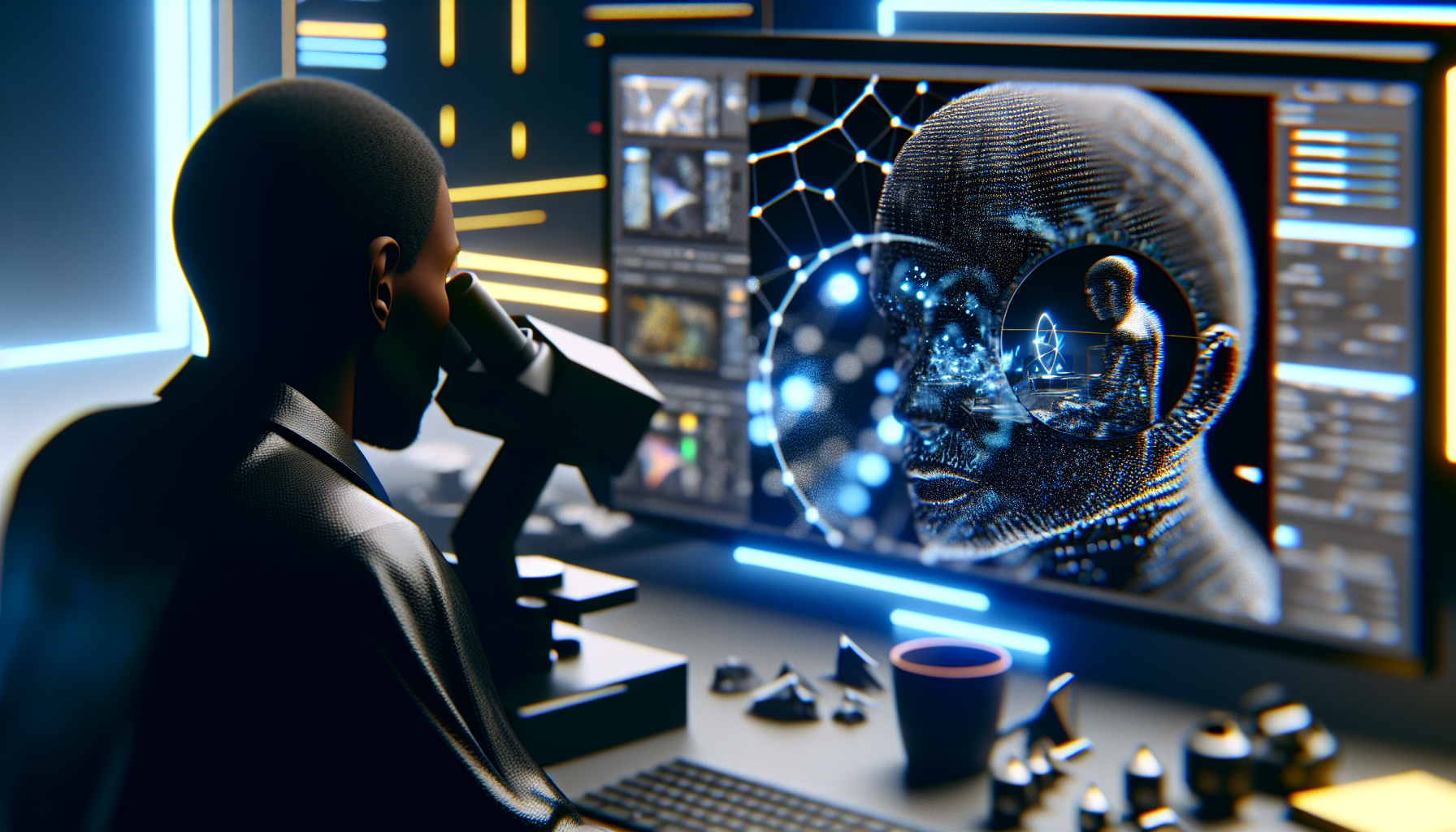
Artificial Intelligence (AI) and 3D rendering technologies are reshaping the landscape of digital media. This article delves into the advancements and applications of these revolutionary tools across various industries. We explore their growing impact and potential.
The Basics of AI Imaging Technology
The Basics of AI Imaging Technology
AI imaging technology uses machine learning to analyze and improve images efficiently. Imagine being able to transform blurry, old photos into sharp, clear ones. This is the magic of AI Imaging & 3D Render Tech.
Image Recognition
For image recognition, AI systems identify objects and details in pictures quickly. They learn to recognize patterns like how we learn to read. **This technology is crucial in many areas.** For instance, in security, cameras with AI can spot unusual activities or faces instantly. Additionally, in healthcare, AI can study medical images to find diseases faster than human eyes.

Automatic Color Adjustment
Automatic color adjustment means AI fixes the colors in an image to make them look natural. This is like having a robot artist adjust your photos to make them vibrant and realistic. For example, a dull sunset photo can become dazzling with the right color mix. Moreover, this technique is helpful in the entertainment industry for enhancing movie scenes without much effort.
Enhancing Resolution
Resolution enhancement means making low-quality images clearer. With AI, fuzzy images become sharp as if taken by a pro camera. For example, AI can upscale a grainy family photo to look brand new. Therefore, industries like fashion or advertising use this to present polished, high-resolution images.
Exciting Uses and Innovations
AI Imaging & 3D Render Tech offers many exciting uses. **In the healthcare sector**, AI can detect cancer cells in x-rays early on. In video games, AI helps create lifelike textures that enhance player experience. Thus, AI rediscovers creativity by adding efficiency and precision.
- AI helps in security by recognizing threats quickly.
- In healthcare, AI detects diseases from images.
- Entertainment benefits from sharper, colorful visuals.
– For more in-depth insight, check the Revolutionizing Visuals with AI Imaging & 3D Tech article.
Additionally, experts predict growth in this field. A report by AI.gov notes AI will revolutionize industries by 2030. Its applications continue to evolve, paving the way for more breakthroughs.
In conclusion, as we explore more, the power of AI in digital creativity becomes evident. Next, we’ll delve into how 3D rendering shapes reality in intricate ways.
Exploring 3D Rendering Capabilities
**Exploring 3D Rendering Capabilities and AI Imaging**
3D rendering uses light tricks to make images look real. It shows complex designs simply.
Simulating Light for Realistic Images
3D rendering simulates light to create lifelike images. This makes pictures from 3D models seem real. By adjusting how light falls, artists can make amazing visuals. This process involves three key features:
- Lighting effects: Useful for adding realism
- Texture mapping: Adds details to surfaces
- Shadow casting: Helps show depth
These features allow creators to craft images that appear very convincing.
Examples of 3D Rendering in Use
3D rendering is crucial in many fields. In architecture, it helps show what a building will look like before it’s built. Designing products can also benefit from 3D renderings. For example, seeing a car’s design in 3D can reveal improvements before making a physical model.
Additionally, animations rely on 3D rendering to bring characters to life. These animations often look so real that it seems like they exist in our world. A great example is visualizing a room’s interior before starting construction. This saves time and money.
Savings of Time and Cost
Creating detailed images with 3D rendering can save lots of resources. By visualizing designs before actual construction or filming, mistakes can be avoided. For instance, builders can see how materials will fit together without physical trials.
Therefore, many industries use 3D technology to cut costs and reduce errors. For more insights, check this descriptive anchor text for more about how AI Imaging and 3D tech work together.
*Image of a detailed 3D architectural rendering illustrating realistic lighting, textures, and shadows.*
Moreover, technology continues to improve with more realistic and faster rendering techniques. As technology evolves, even more realistic representations of ideas will become possible. For further reading, visit this page on 3D rendering.
As we explore these advancements, we transition to the next chapter where we delve into AI and 3D Tech in Gaming and Entertainment. This journey will show how creative industries are reshaped by technology.
AI and 3D Tech in Gaming and Entertainment
AI Imaging & 3D Render Tech revolutionizes game worlds, making them more interactive and realistic. Players can now journey through intricate settings that feel alive, thanks to these advancements.
Adaptive AI and Dynamic Storytelling in Games
With **adaptive AI**, games learn and respond to a player’s style. For example, if you play aggressively, the game might send tougher enemies. Conversely, a careful player might face puzzles. This technique makes each player’s experience unique and keeps games exciting.
Additionally, **dynamic storytelling** allows stories to change based on decisions players make. Imagine choosing between saving a village or capturing treasure. Your choice alters the game’s outcome, creating a personalized adventure.
Stunning Visuals through 3D Render Tech
**3D render technology** creates breathtaking visuals in movies and games. For example, it makes a character’s clothing flow realistically. Shadows, light, and textures combine to form lifelike animations that captivate audiences.
Moreover, films like “Avatar” use **3D renders** for spectacular effects. Audiences see lush environments and compelling character designs, all made possible by this technology. It elevates storytelling, enhancing emotional connections.
Applications in Entertainment
AI and 3D tech are present in various entertainment domains, transforming how stories unfold and appear onscreen. Some applications include:
- Game enemies adapting to player tactics
- Movies with realistic visual effects and detailed environments
- Interactive VR experiences with lifelike settings
Furthermore, a video game’s environment might change based on player actions, adding depth to gameplay. As technology evolves, these features will become even more sophisticated.
**AI Imaging & 3D Render Tech** not only enhances digital creativity but redefines our entertainment experiences. The growing sophistication promises new levels of immersion. For comprehensive insights, explore more on descriptive anchor text.
As this chapter closes, we transition from pixels to understanding how these technologies revolutionize healthcare in the next chapter. Discover how **AI Imaging** and 3D models assist medical professionals and improve patient care. For further reading on the transformative impact of AI in various fields, you might explore resources from credible publications like AI and Machine Learning at Google.
Improving Healthcare with Advanced Imaging
Enhancing Diagnosis with AI Imaging
AI Imaging can greatly improve the way doctors diagnose diseases. **AI Imaging software** looks at pictures from x-rays and scans. It finds patterns and details that human eyes might miss. For example, AI can detect early signs of cancer more quickly and accurately. As a result, patients could start treatment sooner and have better chances of recovery. Moreover, many hospitals now use AI Imaging to assist doctors in making precise diagnoses.
Additionally, AI Imaging isn’t just for detecting problems. It can also help predict how a disease might develop. Therefore, doctors can create personalized treatment plans for their patients. According to HealthIT.gov, AI tools are helping doctors by providing an extra layer of analysis.
3D Modeling in Preoperative Planning
3D Render Tech offers surgeons incredible tools to prepare for operations. Before a surgery, doctors can create **3D models** of a patient’s organ. These models show all the details they need to plan a surgery thoroughly. For example, a 3D printed heart allows surgeons to study the unique structure of a patient’s heart before surgery. Therefore, they can plan the best approach, reducing risks during operations.
Additionally, 3D models enable doctors to simulate surgeries. This practice sharpens their skills and confidence. Therefore, 3D Render Tech not only improves patient safety but also enhances surgical skills.
Revolutionizing Medical Education
Furthermore, 3D Render Tech is transforming how students learn medicine. Instead of reading textbooks, students can explore 3D models of the human body. This interactive learning is more engaging and effective. As a result, students gain a better understanding of human anatomy and surgical procedures. Some schools also use 3D printed models for hands-on practice, making learning more practical and less theoretical.
For example, medical students can examine a 3D printed brain and see how the parts fit together. This method helps solidify their knowledge and prepares them for real-life scenarios. According to a study by NCBI, students who used 3D models performed better in exams compared to those using traditional methods.
Applications of AI Imaging & 3D Render Tech
In many healthcare settings, AI Imaging and 3D Render Tech are essential tools. Here are some of their uses:
- AI Image Analysis for early disease detection like cancer
- Creating 3D models for detailed preoperative planning
- Simulating surgeries for advanced training
- 3D printed organs for practice and study
- Enhanced student learning with interactive 3D models
In conclusion, AI Imaging and 3D Render Tech are transforming healthcare, making treatments safer and more effective. As we explore future trends, these technologies promise even more advancements. For further reading, check this article on AI Imaging and 3D Tech.
Next, let’s look into what’s coming up in AI Imaging & 3D Tech.
Future Trends in AI Imaging & 3D Tech
**Future Trends in AI Imaging & 3D Render Tech**
In the future, AI Imaging & 3D Render Tech will shape digital creativity and expand our visual experiences. These technologies will make our world more realistic and vibrant.
Real-Time Rendering
Real-time rendering is a technology that creates images almost instantly. Imagine seeing amazing graphics that appear in the blink of an eye! Therefore, this will greatly impact virtual reality experiences, making them more lifelike. Currently, rendering can be time-consuming, but with AI, it will become faster and smoother. This advancement will benefit sectors like education, allowing students to explore virtual worlds or historical events in real-time. For more insights on how this works, check out this descriptive anchor text.
AI-Designed Content
AI is beginning to assist in designing art, music, and even virtual environments. This is called AI-designed content. By analyzing patterns and styles, AI can create new and unique pieces of art. Additionally, in industries like defense, AI could design realistic simulations for training. This way, soldiers can practice scenarios in a safe environment. As technology advances, we might see AI generate content that surprises even the most creative human minds. For example, AI could design complex structures for architects or new music that inspires musicians worldwide.
Deepfake Regulation
As AI becomes more powerful, it can create deepfakes, which are fake images or videos that look real. These can be tricky, as they might deceive people. As a result, regulating such content is becoming crucial. Governments and technology companies are working on creating rules to manage these deepfakes. Advanced tools are being developed to detect fake content, ensuring that what we see online is trustworthy. To learn more about this effort, visit this descriptive anchor text.
**Exciting Developments in AI Imaging & 3D Render Tech**
Let’s look at some exciting future possibilities:
1. **Enhanced Virtual Reality**: Immersive experiences in education and entertainment.
2. **Hyper-Realistic Simulations**: Useful in defense and professional training.
3. **AI as Creative Partner**: Helping artists and designers innovate.
4. **Improved Regulation Tools**: Ensuring online content authenticity.
Furthermore, technology will likely continue to evolve, pushing the boundaries of what’s possible. AI Imaging & 3D Render Tech will revolutionize how we experience and create our digital world, leading us to new adventures.
In summary, **AI Imaging & 3D Render Tech** are advancing rapidly, with real-time rendering, AI-designed content, and deepfake regulation paving the way for the future. The potential is immense and will impact various fields, leading to richer digital experiences and creativity.
Conclusions
AI Imaging & 3D Render Tech provide a transformative push for diverse fields. Their applications in enhancing detail, realism, and efficiency have only just begun. These technologies signal a new era in digital creativity.